Habitual traffic offender status in California rarely comes out of nowhere. It usually reaches drivers who were already suspended or revoked and kept driving, picking up new tickets or collisions along the way, or drivers whose repeat DUI convictions carry the label automatically. A habitual traffic offender hearing lawyer's job is to get in front of the license consequences early, because new points on a suspended record can extend a suspension, turn probation into revocation, and create exposure to a separate criminal charge.
Rodney Gould has practiced law since 1991, and the Law Office of Rodney Gould represents California drivers in DMV proceedings statewide from its office in Sherman Oaks. The firm's role in these cases is the license: the driver safety hearings, the record review, and the strategy for getting back behind the wheel legally.
How California Defines a Habitual Traffic Offender

California's habitual traffic offender law, Vehicle Code section 14601.3, targets a specific pattern. It makes it unlawful for a person whose license is suspended or revoked to build up a driving record from driving during that suspension or revocation. Under the statute, any one of the following within 12 months qualifies:
- Two or more convictions for violations worth two points each
- Three or more convictions for violations worth one point each
- Three or more collisions that must be reported under Vehicle Code section 16000
- Any combination of convictions and collisions that adds up to three or more points
The law also presumes you knew about the suspension or revocation if the DMV mailed notice to you. That presumption is conclusive, so the question often becomes whether the DMV actually mailed proper notice, which is one reason your address history and mailing record matter.
This is what separates habitual traffic offender status from the ordinary point-count suspensions Rodney Gould contests as a negligent operator hearing lawyer. For habitual traffic offender status, the points have to be earned while the license is already suspended or revoked.
Two Routes to the Habitual Traffic Offender Label
California attaches the habitual traffic offender label in two different ways, and the rules for each are not the same. Knowing which one applies to you shapes everything that follows, from the hearing strategy to the timeline for getting a license back. The table below also shows how both routes differ from the negligent operator process most drivers have heard of.
| Route | What triggers it | What follows |
|---|---|---|
| Driving record built while suspended or revoked (VC 14601.3) | The conviction, point, or collision counts listed above, all within 12 months | Possible criminal prosecution: 30 days in county jail and a $1,000 fine for a first conviction, and 180 days and $2,000 for a subsequent conviction within 7 years |
| Repeat DUI designation | Certain DUI convictions with priors under Vehicle Code sections 23546(b), 23550(b), 23550.5(b), and 23566(d), or Penal Code section 193.7 | Designation as a habitual traffic offender for three years after the conviction, with a 180-day jail term and $2,000 fine for a later conviction of driving on a DUI-related suspension |
| Negligent operator (not habitual traffic offender status) | 4 points in 12 months, 6 in 24, or 8 in 36 under Vehicle Code section 12810.5 | DMV probation and suspension through the Negligent Operator Treatment System, with the right to request a hearing |
Under section 14601.3, the DMV can refer a qualifying record to the district attorney, and the prosecutor decides whether to file. The repeat-DUI designation, by contrast, comes directly from the sentencing statutes, with notice given through the court.
Point Values That Push a Suspended Driver Over the Line
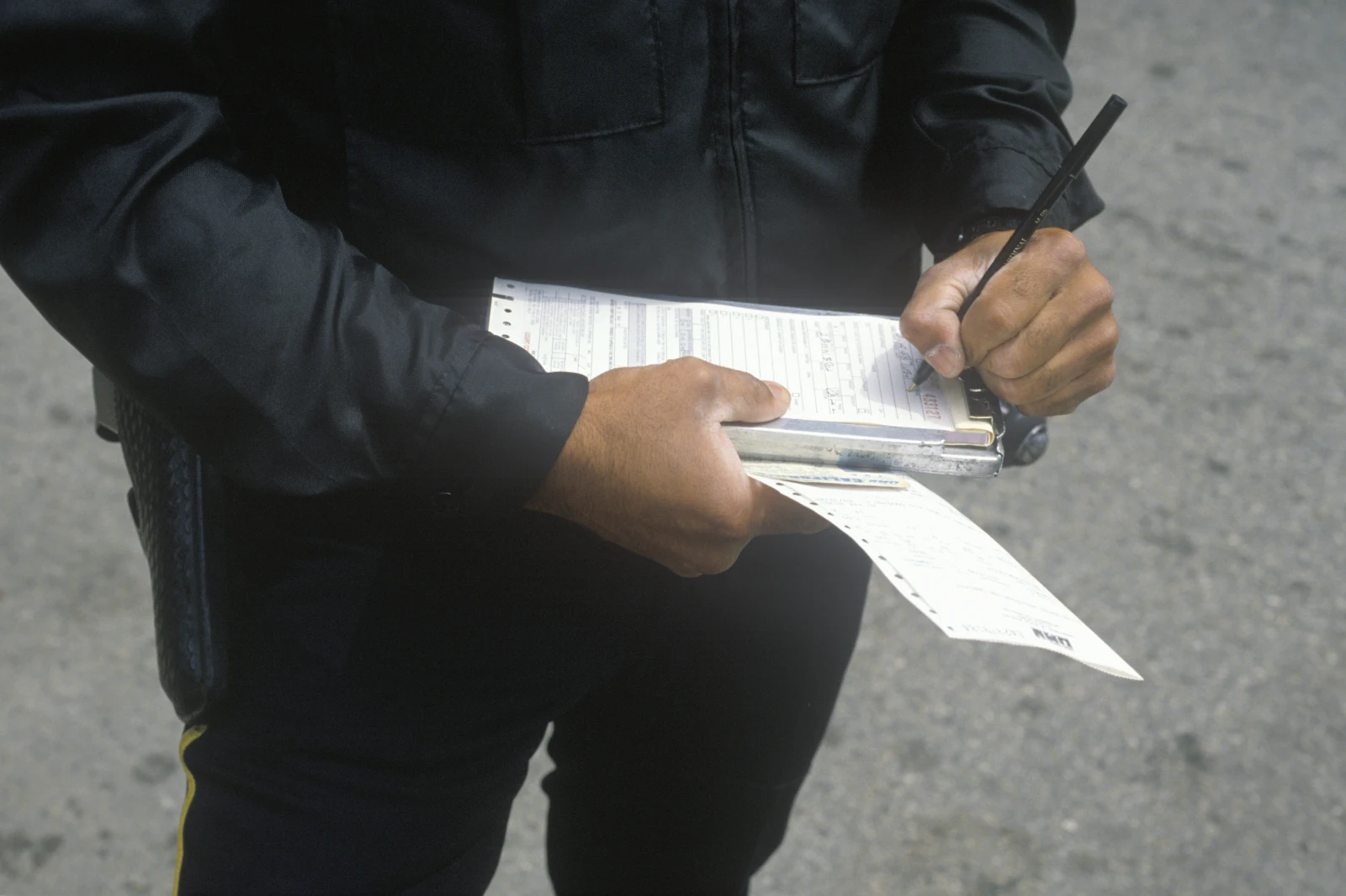
Because habitual traffic offender status is counted in points, the value of each conviction matters, just as it does when working out how many points lead to a negligent operator designation. Vehicle Code section 12810 assigns two points to the most serious violations, including:
- Hit-and-run under Vehicle Code sections 20001 or 20002
- Driving under the influence under Vehicle Code sections 23152 or 23153
- Reckless driving
- Evading a peace officer under Vehicle Code sections 2800.2 or 2800.3
- Driving over 100 miles per hour and engaging in a speed contest
- Driving on a suspended or revoked license under Vehicle Code sections 14601, 14601.1, 14601.2, 14601.3, or 14601.5
Most other moving violations, along with collisions where you're found responsible, count as one point. That last category is where the math turns harsh for suspended drivers, because a single citation for driving on a suspended license already carries two points. The statute also says only one conviction from a single arrest or citation counts toward the total, which is a detail we check on every record.
Where the DMV Hearing Fits Into a Habitual Traffic Offender Case

There is no separate DMV proceeding called a habitual traffic offender hearing. The license side of these cases usually plays out through the same driver safety hearings Rodney Gould handles as a DMV hearing lawyer in California, while any habitual traffic offender charge moves through criminal court. Understanding how the two connect is the key to protecting your license.
Probation Violations Under the Negligent Operator System
Many drivers facing habitual traffic offender exposure are already on DMV negligent operator probation. According to the DMV's negligent operator action levels, any violation or collision during a suspension, or any one- or two-point violation during probation, can lead to a probation violation order. A first or second violation brings a six-month suspension with probation extended by a year, and a third violation brings a one-year revocation.
Requesting a Hearing Before the Action Takes Hold
Negligent operator actions are discretionary, so you have the right to contest them. The DMV's hearing process guidance calls for a request within 10 days of receiving notice, or 14 days from the date of a mailed notice. At a negligent operator hearing, the hearing officer can sustain the action, place you on probation with modified terms, set the action aside, or end it.
When a Repeat DUI Brings a Mandatory Revocation
The repeat-DUI route works differently at the DMV. Revocations that follow multiple DUI convictions are generally mandatory under Vehicle Code section 13352, and section 14101 doesn't provide a hearing on a mandatory action. In those cases, the work shifts to confirming that the DMV applied the correct revocation term, checking eligibility for an ignition interlock restricted license where the law allows one, and mapping out what reinstatement will require once the revocation term ends.
How the Criminal Case Runs Alongside the DMV Case
A habitual traffic offender charge under section 14601.3 is a criminal matter decided in court, separate from anything the DMV does. If you're facing charges, you'll need defense counsel in that case, and Rodney Gould coordinates with your criminal defense attorney so the DMV strategy and the court strategy don't work against each other. Convictions entered in court feed directly back into your DMV record, so timing and outcomes on both sides affect your license.
How the Firm Prepares for a Hearing When Habitual Traffic Offender Status Is in Play
A hearing where your record includes driving during a suspension takes more preparation than a standard point-count case. The hearing officer is looking at a pattern, so the goal is to test the accuracy of that pattern and then show why a lesser action is appropriate. Here is how the Law Office of Rodney Gould approaches it:
- Rebuild the timeline. We line up every suspension period, violation date, conviction date, and collision to see which entries actually fall inside the relevant 12-month window and during a suspension.
- Audit every point. We confirm each conviction's point value, look for duplicate entries from a single citation, and flag collisions that were recorded as your responsibility without support.
- Test the notice. Because knowledge of the suspension is presumed from a mailed notice, we review where and when the DMV sent it and what your address history shows.
- Collect mitigation evidence. Work schedules, family obligations, a clean stretch since the last violation, and completed driver improvement courses can support a modified outcome.
- Propose a realistic alternative. Hearing officers have options short of the harshest action, and Rodney Gould presents terms that address the DMV's safety concerns while keeping your case moving toward reinstatement.
After the hearing, we review the decision with you and, if it goes against you, explain the review options and their deadlines.
Our Recent Client Results
Past results do not guarantee or predict a similar outcome in any future case. Every DMV matter depends on its own facts and circumstances.
Protecting Your Record While a Suspension Is Active
Often, the strongest habitual traffic offender defense is the one that prevents the designation from happening at all. If your license is currently suspended or revoked, these steps protect you while your case is pending:
- Don't drive until you hold a valid or restricted license, since every new conviction during a suspension counts toward the total
- Keep your mailing address current with the DMV so notices reach you in time
- Handle open citations and court dates promptly, because unresolved matters can generate new DMV action
- Save every DMV notice and envelope, along with the dates you received them
- Ask about restricted license eligibility before assuming you have no legal way to drive
None of these steps erase what's already on your record. They do keep a difficult situation from getting worse while the hearing process runs its course.
What Clients Say About Rodney Gould

Rodney and his team are excellent! They walk you through the entire process step by step, and answer all your questions in terms that the average person can and will understand. The best part about my experience is that they're gay friendly. Check them out for yourself.
~ M. C.
Rodney and his firm have provided legal services for our family for years. He's provided estate planning, preparing and executing our will and family trust as well as consulting on real estate transactions and most recently settling a contract dispute. We highly recommend his services. You can completely trust Rodney's...
~ K. and B. C.
Rodney Gould has represented many friends of mine, and all of us value his insight, efficiency, moral judgement, compassion and, of course, his legal knowledge. He has just handled a trust which named me Executor and he guided me through the process.
~ I. D.
An absolutely fabulous experience working with Rodney Gould! His professionalism and timely advice were very much appreciated. Both my adult daughter and I needed to create/update our wills and other health care documents. Rodney worked closely with our financial advisor and made the entire process very streamlined. Rodney is a...
~ A. L.
I lost my partner after 43 years together, and we were friendly with Rodney and his partner for years... but it was only after Bill's death did I REALLY NEED RODNEY... not only for a good friend, but needed him to advise me in all sorts of ways... to take...
~ G. B.
Frequently Asked Questions
How Long Does Habitual Traffic Offender Status Last in California?
For drivers designated under California's repeat-DUI sentencing statutes, such as Vehicle Code sections 23546(b) and 23550(b), the habitual traffic offender designation lasts three years after the conviction. Vehicle Code section 14601.3 doesn't set a fixed duration for its label and instead looks at convictions and collisions within a 12-month period while the license was suspended or revoked.
How Long Do Points Stay on a California Driving Record?
Under California Vehicle Code section 1808, most convictions and collisions stay on your public driving record for three years, DUI convictions for 10 years, and other two-point violations, such as hit-and-run or reckless driving, for seven years. The DMV's negligent operator thresholds, however, count points within 12-, 24-, and 36-month windows.
Can Traffic School Keep a Point Off My California Driving Record?
For an eligible one-point violation, completing traffic school keeps one conviction confidential within an 18-month period under California Vehicle Code section 1808.7. The court decides if traffic school is allowed, and it isn't available for offenses such as DUI or reckless driving. Violations in a commercial vehicle aren't eligible, and a commercial license holder's conviction isn't kept confidential.
Can the California DMV Suspend My License Without a Hearing?
Yes, in some situations. California Vehicle Code section 14101 provides no hearing when the Vehicle Code makes the DMV's action mandatory, such as many suspensions and revocations that follow DUI convictions, or when the driver didn't request a hearing in time. Discretionary actions, including negligent operator suspensions and probation violations, can be contested if the request is made within the deadline on the notice.
Can My California DMV Hearing Be Held by Phone or Video?
Yes. The California DMV's Driver Safety offices conduct administrative hearings in person, by telephone, or remotely through Microsoft Teams, and the hearings are recorded. Your hearing notice and your request determine the format, and an attorney can appear with you in any of them.

Stop the Next Violation From Becoming a Habitual Traffic Offender Case
New tickets or collisions during a suspension, or a repeat DUI that brings the habitual traffic offender label, start DMV deadlines that keep running from the day the notice arrives. Rodney Gould reviews the driving record, the notices, and the options at the hearing ahead, and coordinates with your criminal defense attorney when a court case is open. Results depend on each case's facts and record, and no outcome can be promised.
The office is open Monday through Friday from 8:00 AM to 6:00 PM. Call the Law Office of Rodney Gould at (818) 740-3763 or use the online form and put a plan in place before one more entry on your record makes the next DMV action harder to fight.